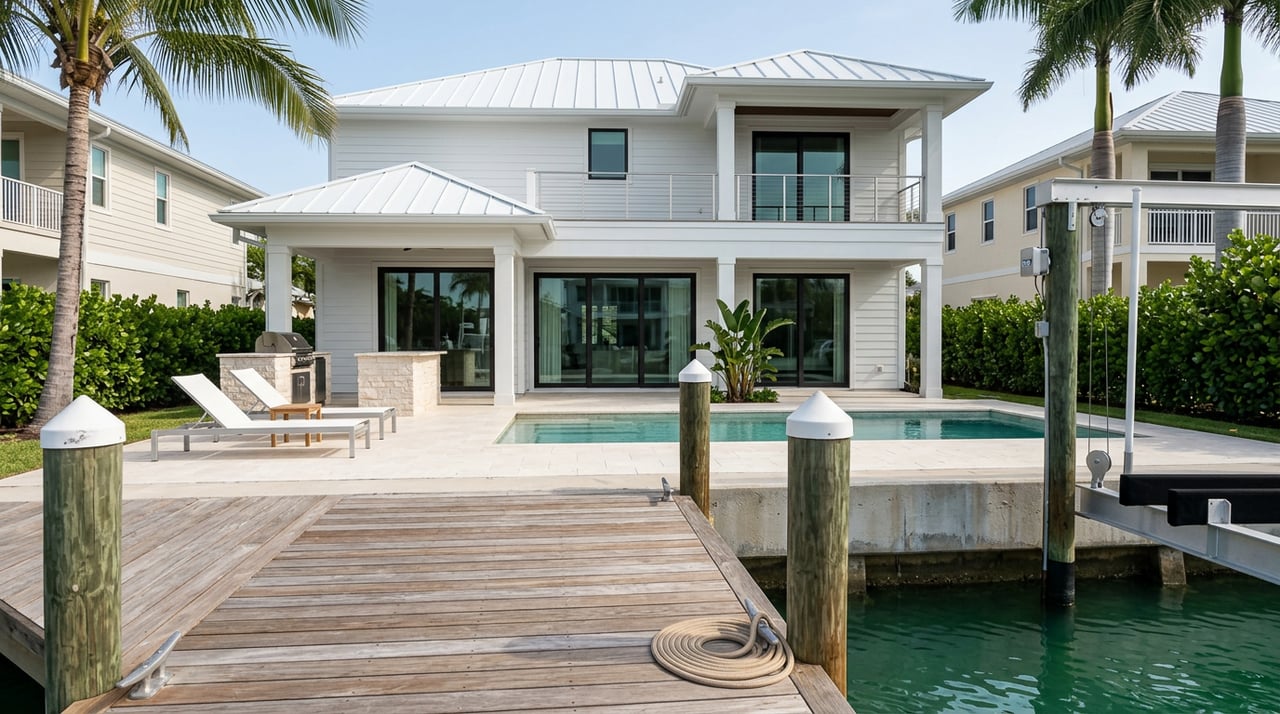
If you love to boat, the canal you choose in Royal Harbor will shape your everyday life on the water. The right lot can mean easier docking, faster runs to Gordon Pass, and a dock that fits your vessel without compromise. The wrong fit can add minutes to every trip, limit your boat size, or create daily hassles with wake and wind. This guide breaks down how Royal Harbor’s canals differ, what to check on each parcel, and how to match canal type and orientation to your boating goals. Let’s dive in.
Where Royal Harbor sits on the water
Royal Harbor lines the east side of Naples Bay in a compact grid of canals that open quickly to the bay. This geography is why the neighborhood is so popular with boaters. You sit close to open water and near Gordon Pass, with no fixed bridges on the most direct routes. On a chart, you can see how short the run is from most docks to the bay and out the pass. For context, review the area on a Naples Bay and Gordon Pass chart, such as the NOAA-based coverage offered by OceanGrafix for Chart 11429, and scan the neighborhood’s footprint on TopoZone’s Royal Harbor map.
In practical terms, many homes enjoy a route to Gordon Pass measured in minutes, not tens of minutes. Exact timing depends on where your dock sits and on posted speed and no-wake zones. Expect some idle time inside the bay, then a short run to the pass and out to the Gulf.
Canal types in Royal Harbor
Royal Harbor has three main waterfront settings. Each offers different advantages for boat size, maneuvering space, and daily convenience.
Bayfront lots
Bayfront lots face open water rather than a narrow canal. You gain more maneuvering room, wider sightlines, and the easiest staging for larger boats. Many bayfront owners favor these sites for longer slips and simpler docking, especially for planing cruisers. Exposure to wind and afternoon chop can be higher, which matters for how your boat rides at the dock.
Main canals
Main canals are the wider connectors that lead into Naples Bay. They deliver a nice balance of protection and quick access. You get more turning room than a finger canal with less exposure than a bayfront position. If you value fast runs to the Gulf and want a bit more shelter at the dock, a main canal often hits the mark.
Finger canals and cul-de-sacs
Finger canals and their cul-de-sacs are quieter and more private. You trade passing traffic for tighter turning basins and, at times, shallower ending depths. These locations can be ideal for center consoles, bay boats, and smaller cruisers. If you plan to keep a larger yacht, confirm canal width, turning radius, and depth at the seawall before you commit.
Orientation: sun, wind, and wake
How your dock faces changes your daily routine.
- West-facing docks capture sunsets and late-day sun. You will enjoy evening light on the water, but you may also feel more afternoon sea breeze on open exposures.
- East-facing docks are cooler in the afternoon, which is useful for maintenance or washing down the boat.
- Lots near main channels experience more pass-by traffic and potential wake. Cul-de-sacs and interior fingers are calmer but can have tighter swing room.
When possible, visit at a busy time to observe wake, wind patterns, and how boats maneuver nearby. A 20-minute walk-through during a Saturday tide can teach you more than a week of online research.
Access to the Gulf: depths and dredging
Many Royal Harbor listings advertise “no fixed-bridge” Gulf access. That phrase speaks to overhead clearance on the shortest route to the Gulf. It does not guarantee depth at your seawall, ample turning room, or a shoal-free channel year-round. Always confirm these items for a specific parcel.
Naples-to-Big-Marco Pass is an authorized federal channel that includes Gordon Pass. The U.S. Army Corps of Engineers manages maintenance dredging and related work on a recurring basis. In recent years, the Corps has issued notices and scoping actions for the project, including a 2024 update on the Naples-to-Big-Marco Pass dredging scoping letter. Historical contract actions for Gordon Pass also show the pattern of ongoing maintenance, such as the dredging contract award noted by USACE.
Bottom conditions change with storms and shoaling. Before your first run, review current NOAA charts and recent Local Notices to Mariners, and speak with a local resource that monitors Naples Bay conditions. For a quick area overview, see the US Harbors Naples Bay summary. For navigation, rely on the latest NOAA chart updates and posted markers in the field.
Docks, lifts, and seawalls: what to expect
Royal Harbor docks vary, but you will commonly see:
- Fixed docks with finger piers and terminal platforms.
- Floating docks where local depth and tidal range favor a floater.
- Boat lifts on piles or tied into the seawall. Lift capacity and bunks must match your hull and weight.
- Shore power, freshwater, cleats, and bumpers as typical dock amenities.
Permitting is multi-agency. Expect city or county building permits for structural and electrical work, Florida Department of Environmental Protection review for coastal elements, and U.S. Army Corps of Engineers involvement when federal waters or dredging come into play. For a practical overview of the local process, review this Collier County dock permitting guide from a marine contractor.
Seawalls are a predictable, high-cost maintenance item in any canal neighborhood. Plan for periodic inspections and a reserve budget for repairs or replacement over time. For a helpful owner perspective, see this overview of seawall maintenance and budgeting west of US-41.
Match your canal to your boating lifestyle
You will enjoy Royal Harbor most when your canal and dock setup suit the way you use your boat.
Short-run, frequent-use boaters
If you fish the bay, beach-hop, or run quick shelling trips:
- Favor main canals or finger canals near the bay mouth to minimize idle time.
- Look for simple lift setups or floaters that speed up launch and return.
- Confirm shore power and freshwater at the dock for fast turnarounds.
Cruisers and weekenders
If you plan overnights or longer coastal trips:
- Seek wider canal frontage or bayfront lots for easier staging and turning.
- Verify deeper approaches and comfortable low-water depth at your seawall.
- Stay current on channel maintenance. Bookmark the USACE project page for Naples-to-Big-Marco Pass, and check charts before departures.
Sailboats and tall air draft vessels
If you run a sailboat or tall express cruiser:
- Confirm “no fixed-span bridges” on your specific route.
- Verify overhead clearance for any utilities or temporary works.
- Check mean low water depth at the seawall and along your approach. A conservative test run by a local captain at low tide can provide peace of mind.
Buyer’s on-site checklist
Use this list at open houses or inspections to align a property with your vessel.
- Measure canal width at the lot and across to the opposite frontage. Do not rely only on marketing ranges; verify with a plat or survey.
- Ask for recent depth information at the seawall and approach. Use the latest NOAA-based chart for Naples Bay and Gordon Pass, but also request parcel-level soundings or a hydrographic check if depth is critical.
- Confirm turning-basin diameter at the cul-de-sac or canal mouth. Compare to your boat’s LOA and beam with a simple turning diagram.
- Review dock and seawall permit history, age, and any engineer’s reports. Confirm final inspections and as-built documents are available.
- Clarify who is responsible for dredging near the property and the nearest channel reach. Note any recent or pending federal activity, such as the USACE scoping update for the Naples-to-Big-Marco channel.
- Check posted speed zones, no-wake areas, and seasonal wildlife protections that affect transit times. Use current charts and the US Harbors Naples summary as a planning aid.
- Verify dock utilities and lift capacity. Note shore power amperage and GFCI locations, lift rating and bunk configuration, and any flood-zone or elevation data that may affect insurance. For process context, see this local permitting guide.
Local knowledge that matters
Small details drive day-to-day ease in Royal Harbor:
- The closer you are to the bay mouth, the shorter your idle time. Walk the canal edges and watch boat traffic to get a feel for flow and wake.
- Afternoon sea breezes tend to freshen from the west. If you want calmer late-day water at the dock, consider interior canals or an east-facing orientation.
- Keep a living file for your property: permits, as-builts, seawall reports, lift service logs, and recent soundings. This file protects you as an owner and adds clarity for future resale.
Putting it all together
Choosing the right Royal Harbor canal is about fit. Match the canal type to your boat size, confirm depth and turning room at low water, consider how sun and wind shape your daily routine, and make sure your dock and seawall are ready for the way you cruise. With careful due diligence, you can enjoy quick runs to Gordon Pass, confident docking, and a low-friction boating life at home.
If you want a second set of eyes on a specific property, or you are weighing a renovation or new dock plan, let’s talk. We pair neighborhood-level expertise with practical project guidance to help you buy with confidence and position your waterfront for the long term. Schedule a private consultation with the McCumber Group.
FAQs
How close is Royal Harbor to Gordon Pass for boaters?
- Many docks sit minutes from Gordon Pass, depending on canal location and speed zones. For a visual of the neighborhood’s proximity, review TopoZone’s Royal Harbor map and the NOAA-based chart coverage.
Does “no fixed-bridge” access guarantee deep water in Royal Harbor?
- No. It only indicates no fixed-span height restrictions on the route. Depth, turning room, and shoaling still vary. Check current charts, Local Notices to Mariners, and the USACE project updates, and verify parcel-level soundings.
How do I confirm canal depth for a specific Royal Harbor lot?
- Start with the latest NOAA-based chart for Naples Bay and Gordon Pass, then request recent soundings, as-builts, or a licensed hydrographic check at the seawall and along the approach.
Who maintains Gordon Pass and the Naples-to-Big-Marco channel?
- The U.S. Army Corps of Engineers oversees the federal channel’s maintenance. See recent actions in the USACE scoping notice for Naples-to-Big-Marco Pass.
What permits do I need to build or upgrade a dock in Naples?
- Expect local building permits for structural and electrical work, state environmental review, and possible USACE involvement. For a practical overview, see this Collier County dock permitting guide.