Is Port Royal Club membership a nice-to-have or a true value driver? If you are weighing homes in Port Royal, the answer can shape your price, your buyer pool, and how quickly a property moves. You want clarity before you pay a premium or set a list price. In this guide, you will see how membership eligibility and proximity influence demand, pricing tiers, and time on market, plus the steps to measure the impact for your specific property. Let’s dive in.
Port Royal Club overview
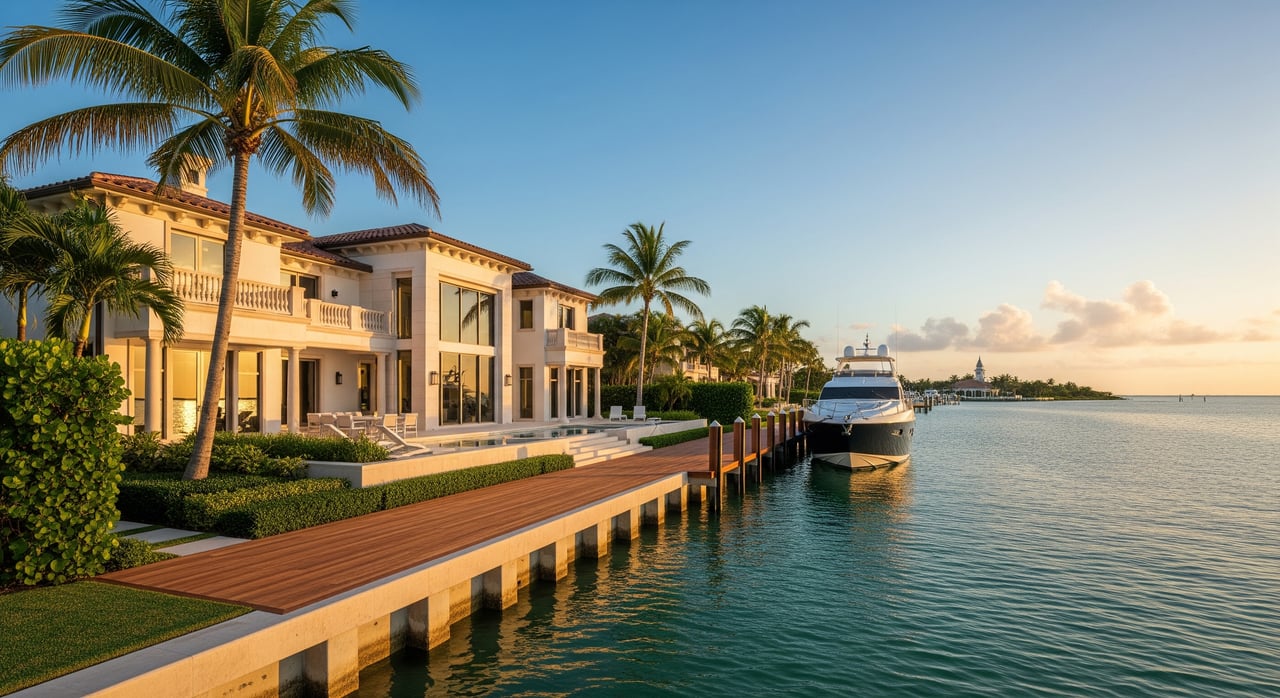
Port Royal is Naples’ signature luxury enclave, known for large lots, deep-water access, and a long record of ultra-high-end sales. The Port Royal Club is a private social and amenity hub with dining, pool, tennis or pickleball, and a full social calendar. Many luxury buyers compare properties partly on access to private club life.
Membership policies matter. Ownership of a home does not always equal membership. Clubs often distinguish between owner memberships, transferable memberships, wait lists, and limited equity options. Rules, fees, capacity, and transferability can change. Always confirm current policy directly with the club before you set expectations.
Why membership matters to value
Club access can influence value through several demand drivers:
- Lifestyle premium: Some buyers view private dining, events, and a unified social scene as non-negotiable.
- Scarcity and exclusivity: If membership is capped or owner-only, eligible homes are rarer, which can increase willingness to pay.
- Cost calculus: Buyers weigh initiation fees and dues against lifestyle value. If costs feel high relative to perceived benefit, demand can soften.
On the supply side, eligibility and proximity can place a home in a premium tier within the neighborhood. Listings that highlight “Port Royal Club privileges” often draw buyers who are specifically seeking that amenity, which can improve targeting and shorten the path to contract when pricing is right.
Price bands and premium ranges
In Port Royal, homes with club eligibility or a clear path to membership often sit in the higher bands of the price distribution. The premium is not uniform. It depends on several factors, including:
- Whether membership conveys with the sale or requires a separate process
- How limited or transferable membership is at the time of sale
- Waterfront type, lot size, view quality, and renovation level
- Absolute price point, since percentage premiums typically compress at the very top end
In peer luxury markets, brokers often cite amenity-driven premiums ranging from low single digits up to double digits. Your specific estimate in Port Royal should come from local matched-pair or regression analysis that controls for key property traits.
Time on market effects
Membership can shorten or lengthen time on market depending on the situation:
- If a segment of buyers prioritizes club life, well-priced, club-eligible homes can sell faster.
- If initiation fees are high, or a wait list creates friction, some buyers hesitate and days on market can rise.
- Positioning matters. Overpricing a “club” home can stall momentum, while accurate pricing can speed up the sale compared to similar non-eligible listings.
Proximity and marketing impact
Proximity to the clubhouse and ease of access can add convenience value. Homes within comfortable reach of the club are straightforward to market around the club lifestyle. Clear messaging about eligibility, transfer steps, and current fees reduces buyer uncertainty and supports confident offers.
How to estimate the premium
You do not need a PhD to quantify a club effect. You need clean data, consistent controls, and simple comparisons.
Gather the right data
- Pull Port Royal closed sales for the last 24–36 months from MLS, plus current actives.
- Cross-check Collier County Property Appraiser data for lot size, parcel details, and sales history.
- Confirm membership rules, fees, and transfer status with the Port Royal Club.
- Review listing remarks and seller disclosures to flag whether membership conveys or is simply eligible.
Control for key variables
When comparing sales, adjust for:
- Waterfront category and dock depth/access
- Lot size, building square footage, beds and baths
- Year built, renovation level, and finish quality
- View quality and guest or garage capacity
- Exact distance to the clubhouse
- Whether membership conveys, is optional to purchase, or is not available
- Sale timing and any concessions
Matched-pair comparison
- Find two or more highly similar sales where one included membership access and the other did not.
- Adjust for obvious differences, then look at the price gap. The residual suggests the amenity premium.
- Strength: Easy to explain. Weakness: Small sample size in exclusive enclaves.
Hedonic regression
- Regress sale price, or price per square foot, on your control variables and include a flag for club eligibility or a distance measure.
- The coefficient on the club variable estimates the premium, all else equal.
- Strength: Uses more data. Weakness: Requires statistical skill and enough sales.
Price-band and days-on-market
- Segment sales into price bands, then track what share in each band had club access.
- Compare median days on market for eligible vs. non-eligible homes within the same price band.
- Use recent 12–24 months to reflect today’s conditions.
Buyer checklist and strategy
Before you offer, confirm the facts and your full cost of ownership.
- Membership status: Does the home convey membership, provide eligibility, or neither? Are there wait lists?
- Fees and dues: What are the initiation fees, monthly dues, and any recent assessments?
- Timing: If there is a wait list, what is the realistic timeline to activate access?
- Resale alignment: Will the next buyer segment value the same amenity at resale?
- Alternatives: How do costs and access compare to other private clubs you might use?
If the club lifestyle is central to your decision, factor initiation and dues into your total budget. If financing, ask your lender and appraiser to consider club-eligible comps so the valuation reflects what you are buying.
Seller prep and marketing
If your property is club-eligible, present that fact clearly and confidently.
- Pricing: Use paired sales or a regression-informed range to capture the premium without overreaching.
- Documentation: Prepare proof of eligibility or transfer rights, fee schedules, dues history, and any wait-list notes.
- Storytelling: Highlight the most valued amenities and recent improvements at the club.
- Friction removal: Be ready for requests to offset initiation fees in negotiations, when supported by comps.
Clarity builds trust. Buyers respond to precise, verified information about access, costs, and timing.
Negotiation levers and red flags
- Levers for buyers: If membership does not convey or involves delays, use that friction to negotiate price or terms.
- Levers for sellers: If your home offers turnkey access, emphasize scarcity and convenience in your positioning.
- Red flags for both: Unclear transfer rules, pending dues increases, or capital projects that could trigger assessments. Ask for documentation and plan accordingly.
Appraisal and financing notes
Appraisers may or may not ascribe an explicit premium for club access. If you plan to finance, make sure the comparable sales presented to the appraiser reflect similar membership status and proximity. Strong, apples-to-apples comps support a smoother valuation.
When paying the premium makes sense
Consider paying a premium when the club lifestyle is a core part of your day-to-day plan, the membership is scarce or capped, and the home also checks major value boxes like waterfront type, lot, and view. Be cautious paying top-tier premiums when eligibility is uncertain, when there is a long wait list, or when the initiation and dues structure does not align with your expected use.
Work with a trusted local advisor
In Port Royal’s ultra-luxury segment, small details move big numbers. A local, data-driven approach helps you isolate the true club effect while controlling for waterfront type, lot, and renovation quality. If you are pricing a sale or targeting a purchase, you deserve analysis that is specific to Port Royal and current club policy.
For a discreet, data-backed strategy tailored to your goals, connect with the McCumber Group. Schedule a private consultation or request private-market access.
FAQs
Port Royal Club membership and home purchase
- Buying a Port Royal home does not automatically include Port Royal Club membership; confirm current eligibility, transfer rules, capacity, and any wait list with the club.
Premium size for club-eligible homes in Port Royal
- There is no fixed number; in peer luxury markets, amenity premiums can run from low single digits to double digits, but you should estimate locally with paired sales or regression.
Days on market for club-eligible listings
- Club access can shorten time on market for buyers who prioritize the amenity, but pricing and current membership friction, such as fees or wait lists, are decisive.
Buyer due diligence for Port Royal Club
- Verify whether membership conveys, all fees and dues, any assessments, the existence of a wait list, and how access compares with other clubs you might consider.